
Drug maker Sun Pharmaceutical Industries on Monday said it has commercially launched generic Ethyol, used in the treatment of cancer. Ethyol is the generic version of Medimmune's Ethyol amifostine injection, used for treating cancer, Sun Pharma informed the Bombay Stock Exchange, adding that the drug has an annual sales of $80 million in the US.

The US Food and Drug Administration (USFDA) has issued a warning letter to RPG Life Sciences for violation of current good manufacturing practice (CGMP) norms at its two plants at Ankleshwar and Mumbai.

When AI is used to enhance operational efficiency, businesses can deliver the same product or service but with improved quality, faster, or even at a reduced cost
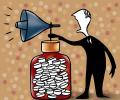
The tailwind of low price erosion in the US generics market, seen by domestic pharmaceutical companies in calendar year 2023 (CY23), may be reversing slowly, caution analysts. According to the latest data from US-based Centers for Medicare and Medicaid Services (CMMS), price erosion in calendar year 2024 (CY24) on a year-to-date (YTD) basis stood at a high of 15 per cent in the oral solid dosage (OSD) segment compared to a low of 1 per cent in CY23. This erosion, according to a report by Antique Stock Broking, was the highest in the last three years.

The US health regulator has pulled up drug major Sun Pharma for manufacturing lapses, including failure to follow appropriate written procedures designed to prevent microbiological contamination of drug products, at its Gujarat-based plant. In a warning letter, the US Food and Drug Administration (USFDA) pointed out various lapses at the Halol plant which produces finished pharmaceutical products. "This warning letter summarises significant violations of Current Good Manufacturing Practice (CGMP) regulations for finished pharmaceuticals... Because your methods, facilities, or controls for manufacturing, processing, packing, or holding do not conform to CGMP, your drug products are adulterated," the USFDA stated.

Indian companies are generating more cash than ever. The net cash flow from listed firms' operations hit a new high of Rs 11.1 trillion in financial year 2023-24 (FY24), crossing the Rs 10-trillion mark for the first time, according to the Centre for Monitoring Indian Economy (CMIE) data going back to 1990-91. The FY24 figure represents a 19.3 per cent jump over the previous year, even as quite a few companies are yet to release their numbers.

Pfizer, the world's largest drug company, and Wyeth have sued Daiichi Sankyo-owned Ranbaxy Laboratories in a US court for infringing the patent rights of Wyeth's drug, Rapamune.
Government plans to move from controlling bulk drugs to formulations.

The impact from NELM on the Indian pharmaceutical sector is estimated to be around Rs 6,000 crore.


India's merchandise exports dipped marginally in March to $41.69 billion, and by 3.11 per cent during the last fiscal year to $437.06 billion mainly due to continued geopolitical turmoil, and depressed global trade. Imports, too, declined in March as well during the entire 2023-24. Trade deficit, or the gap between imports and exports, narrowed 17.74 per cent in March to $15.6 billion and came down 9.33 per cent to $240.17 billion in FY24.

Glenmark Pharmaceuticals on Thursday said it will sell a 75 per cent stake in its subsidiary Glenmark Life Sciences to Nirma Ltd for Rs 5,651.5 crore.

'Whichever company offers better incentives, the chemist would prefer it.'

The United States 'is leading the world in the use of compulsory licenses, and is hypocritical in voicing indignance when developing countries issue compulsory licenses for essential drugs,' Washington-based Knowledge Ecology International, with its offices in Geneva, has alleged.

Pharmexcil had recently taken a 25-member delegation to Iran in order to promote pharma trade with the Western Asia nation.

The 344 banned drugs include the fixed dose combination of Chlopheniramine Maleate and Codeine syrup sold under the popular cough syrup brand Corex.

Notwithstanding the fact that the country's pharmaceutical (pharma) pricing regulator has allowed a 12 per cent price increase for medicines listed under the National List of Essential Medicines (NLEM) in 2023, analysts and industry insiders predict that the overall domestic pharma industry will only witness a price hike of 5-6 per cent. This is attributed to higher competitive intensity in the market. Krishnakumar V, executive director and chief operating officer (CEO) of Eris Lifesciences, a domestic-focused pharma company, noted that the NLEM segment experienced growth suppression of around 150 basis points due to price reductions during the January to July period this year.
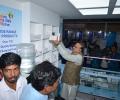
Large pharmaceutical firms feel that if the quality parameters and assurance levels are brought up to the level of branded generics, then Jan Aushadhi medicines would find it difficult to retain their affordability.

Roadblocks ahead as these medicines could face new clinical tests, more scrutiny

An increase in the number of outsourcing deals between domestic drug companies and pharmaceutical multinationals has triggered huge capacity expansion programmes in the drug manufacturing sector.
It will bring 348 essential drugs under price control.
Pharmaceutical companies in the country offering any financial incentive to doctors to prescribe particular drugs may become a thing of the past if the drug manufacturers decide to follow the strict code of conduct being implemented by a US industry trade group.
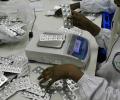
There are just 1,500 drug inspectors responsible for more than 10,000 factories in India
Various domestic companies such as Ranbaxy, Wockhardt and Agila Specialities recently came under the US FDA scanner for lapse in manufacturing practices.
The non-branded generic drugs (sold under chemical names such as cetrizene, omeprazole and nimusulide), which constitute about 8 per cent of the Rs 30,000 crore (Rs 300 billion) Indian pharmaceutical market, is currently not subjected to any such margin cap and according to a study done by the department some of them such are even sold at a margin as high as 1,000 per cent in the market.
.jpg)
Global pharmaceutical firms have had a series of patent disputes with Indian makers of generic drugs and several recent Indian rulings have gone against the international giants.
In a decision that would impact the entire pharmaceutical industry, the National Pharmaceutical Pricing Authority (NPPA) has fixed the prices of 130 common drugs and antibiotics.
Cymbiotics, a US-based bio-pharmaceutical manufacturer, has entered into a joint in-licensing agreement with Elder Pharmaceuticals to manufacture and market three of its drugs for pain management, diabetes and dermatology in the Indian market.

Mandatory prescription of generic names is not a complete solution. Rather, in the absence of a range of approaches, it could mean passing the choice of selecting a drug from a doctor to a pharmacist, says Chandrakant Lahariya.

Besides opposing the suspension of three medicines, the sector has also questioned the process adopted by the government.

In an exclusive interview with PTI video, the minister also said an extensive risk-based analysis is done continuously to ensure the production of quality medicines in the country, and the government and regulators are always alert to ensure that no one dies due to spurious medicines.

Cipla is recalling the drug for failed impurities and degradation specifications.
